
Writing on the walls of abandoned house near Vale, Oregon
The High Desert Museum, in Bend, Oregon, is currently hosting the Creations of Spirit exhibition. The pieces on display include historical artifacts and works by contemporary Native artists.
The beautiful pieces are enhanced by quotes throughout the gallery. I will let their words tell the stories.
Throughout the process, you continually impart yourself in the creation of that object. And when you’ve completed it, it takes on a life of its own.
Philip Cash Cash, Ph. D., Weyíiletpuu (Cayuse) and Niimpíipuu (Nez Perce) tribes

I wanted to have my own story in the baskets. I wanted to keep the traditional form and the shape, but I wanted to add iconography that talked to the present.
Joe Feddersen, Member of the Confederated Tribes of the Colville Reservation

Root bag with multiple figures by Plateau artist (early 1900s); Basket with animal figures by Umatilla artist (mid-1900s); Round Dance pitcher & cup by Joe Feddersen, 2002; Berry-picking container by Vivian Harrison, (StuYat), Yakama/Palouse/Wishram, 2002
Most of my designs are from the petroglyphs along the Nch’i wana [Columbia River]. I love and appreciate where our people came from, and our people left animals as stories in our pictographs and petroglyphs. That’s why I want to instill them in my baskets and keep them alive. I want people to know that we’ve been seeing these animals for tens of thousands of years.
Natalie Kirk, Confederated Tribes of Warm Springs

Continue reading
The sculpture of Crazy Horse in South Dakota stands out along the horizon as you drive north from Custer. We visited the site earlier this month, near the date of its 75th anniversary, to view the progress on the immense sculpture.

The Crazy Horse Memorial includes a Welcome Center, a gift store and restaurant, the family home of the sculptor, rotating exhibits, indoor and outdoor sculptures, the Native American Educational and Cultural Center, and the Indian Museum of North America. I’ll feature photos of the Museum in a later post. The nonprofit also manages the Indian University of North America.
One of my favorite things was a 1/34 scale model of the Crazy Horse sculpture. The size of the finished sculpture carved into the mountainside will be 641 feet long and 563 feet tall.

If you stand in just the right spot, you can capture an image that includes the scale model and the current sculpture.

I did a lot of looking up in Burns, Oregon on my trip in April 2023. The main purpose of my trip was to look for birds on Harney County Migratory Bird Festival tours. However, I arrived a day early to participate in the Downtown Walking History Tour.
Burns was officially established in 1884 and incorporated in 1889. The Northern Paiute, or their ancestors, lived here for thousands of years prior to the arrival of European settlers. Harney County, where Burns is located, is the largest county in Oregon and ninth largest in the nation. This sparsely populated county is 10,226 square miles in size. The population of Burns, its largest city, was 2,757 in 2021.
Our tour guide told us about the history of buildings along the main road. Sometimes she pointed out areas where no building currently exists. Unfortunately, fires destroyed many buildings in years past. It is ironic that the town of Burns had so many fires.
While I listened to facts about many of the buildings we passed, I kept looking up in Burns. My attention wandered, and I focused on the architecture overhead.
Some of the buildings had fallen into disrepair.

Others retained parts of the original structure with updates, like modern windows.

The Federal Building housed the Post Office at one time. I think it was once the tallest building in Burns.

A collection of ingredients used to cure maladies at an ancient apothecary

A few carefully curated contemporary works, echoing history

I saw this well-known quote on where the path may lead you at the Evergreen Aviation & Space Museum in McMinnville, Oregon.

I’m sharing photos of a Guinness Storehouse visit on this Saint Patrick’s Day. The Storehouse is in Dublin, County Dublin, Ireland and it gets millions of visitors a year.

Guinness was first created in 1759 and the Storehouse where it’s made opened to the public in 2000. The best selling alcoholic drink in Ireland is Guinness. The exhibits at the Storehouse lead you through the history and manufacturing of this iconic beer.

I liked how the display boards had brief, informative explanations.

Displays are also artistic and multimedia. This fountain was one of my favorites. I’ll share photos of their whimsical advertising displays in a future post.


A plane dreaming of flying at the Evergreen Aviation and Space Museum, McMinnville, Oregon
These ladles in waiting are at the Kam Wah Chung State Heritage Site in John Day, Oregon.

Did you know you can reveal petroglyphs with a little digital magic? Yep, there’s an app for that. In this post, I’ll show you how I revealed several petroglyphs with the app, Rock Art Enhancer. Click through the slideshow of each image below.
In each of the first pictures, I show the original image. In the second, I used the Auto level and increase saturation tool. The third pictures show a variety of effects. All of these petroglyphs are located in southeast Oregon.
These petroglyphs were carved into rock thousands of years ago and over time they have become less clear. Unfortunately, the messages conveyed by many of these carvings are unknown. While some show obvious elements of wildlife, humans, and the sun, others are open to interpretation.
The first series shows petroglyphs on a rimrock cliff located in Harney County. The second effect brings out the details, but I prefer the almost psychedelic colors in the third image. The third effect used the Decorrelation Stretching (abbreviated as D. Stretch) YUV Custom tool.
Continue readingThere, above a rocky shore, a cylindrical tower appears.
The shipwrecked crew stumbles towards the house of perpetual light.
They ascend a zigzagging set of stairs, rising above the gray mist.

A well-worn trail leads them towards the shining tower.
Thick fog clears, revealing a path that encircles the lighthouse.
The crew heads towards the front door, seeking warmth and sustenance.

Last month, we took a trip to see the Spruce Goose at the Evergreen Aviation and Space Museum. This museum is in McMinnville, about 50 miles southwest of Portland, Oregon. Its star attraction is the airplane associated with Howard Hughes, Jr.
In 1942, steel magnate Henry Kaiser approached Hughes about creating a massive flying boat. Hughes was well known for breaking records as a pilot, including a 1935 landplane airspeed record of 352 miles per hour. In 1938, Hughes flew around the world in 3 days 19 hours 17 minutes, beating the previous record by almost four days. He was also a brilliant engineer.
After Kaiser withdrew from the flying boat project in 1944, Howard Hughes renamed the plane H-4 Hercules. It’s also called the Hughes Flying Boat and the Spruce Goose. Hughes become obsessed with the project. Though the original intention was for the aircraft to help with war efforts, by the time they completed the project, the war was over.
Hughes flew the plane on November 2, 1947. He wanted to prove it was airworthy and not just a flight of fancy. In its first and only flight, he flew it at an altitude of 70 feet for 26 seconds. The aircraft flew for about one mile at a speed of 135 miles per hour.
I knew the Spruce Goose was large, but I had no idea how enormous it was. I’m including several exterior photos to show the scale of this massive aircraft. The first picture shows a view from the second-story balcony.

The next two show aircraft on display under one wing and then the other. They look so small in comparison.

If you’d like to see a large collection of amazing airplanes, be sure to visit the Western Antique Aeroplane and Automobile Museum (WAAAM) in Hood River, Oregon. The indoor hangar space is more than 3.5 acres in size.
All of the aircraft have been restored to working condition. This process takes a long time and the Museum restores an average of two per year. Our family donated a Fly Baby homebuilt plane, but it’s not yet on display.
The planes are generally arranged by type within the buildings.

Biplanes have interesting designs and they’re a great subject for photographs. I featured one of them in a black and white photograph in a previous post.
Mike and Linda Strong, friends of the family, donated the two 1929 WACOs pictured below. Mike worked as an airline pilot for many years and liked to fly smaller planes in his spare time. He gave me a ride in one of the WACOs years ago and it was a memorable experience.
The first WACO is a taper wing. At high speeds, tapered wings decrease drag and increase lift. They also make the plane lighter and more maneuverable.

The Imagine a World exhibition at the High Desert Museum focuses on past and present efforts to create utopian communities. Participants joined for assorted reasons, including religious persecution, environmental concerns, and anti-war sentiments.
The communities featured are in the Western United States. Founding members often thought of the West as an idyllic, “empty” place to settle. However, they did not always consider who was already living in these environments.

As you enter the gallery, two life-sized astronauts suspended in front of a bold painting of bison catch your eye. Two bright paintings adorn the walls next to this display. These works represent Indigenous futurism. They highlight how important cosmology, science, and futurism have been to Native peoples. Grace Dilon, Ph.D. (Anishinaabe) states that Indigenous futurism is part of the process of “returning to ourselves.” The goal is to recover “ancestral traditions in order to adapt in our post-Native Apocalypse world.”
Continue readingsheepherder’s wagon
rolling across windswept plains
steady sentinel


Historic Short Bridge, built in 1945.
Trying to choose only three of my favorite photos for this challenge was very difficult. I decided to focus on memorable moments from home.
The first shows a glorious fall sunset behind my juniper tree muse. I like the combination of color, lightness and darkness, and texture in this photo. The branches of the western juniper tree seem to be directing a symphony of clouds.

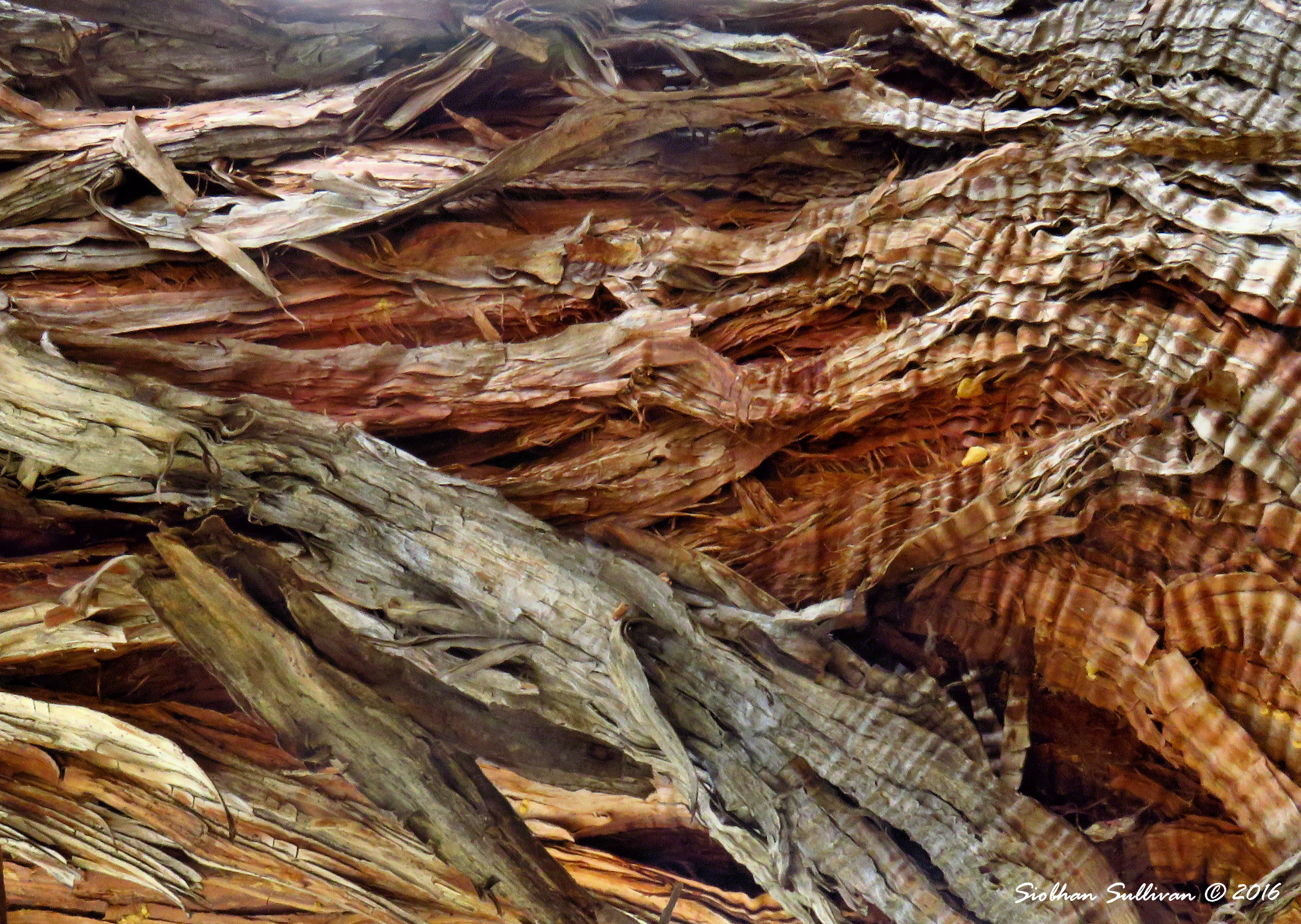
The second is a close up view of a different juniper tree’s bark. Though some see western junipers as an unwelcome invader in sagebrush habitats, I’m impressed by their beauty. Their rough bark varies in color, as does their wood. Wrinkles add to their character as they age. The birds in my yard are grateful for the shelter and food these trees provide.
The third picture is of my “pet” Cooper’s Hawk. I’ve taken a lot of pictures of her. On this day, she took an extended bath and spent a long time preening her feathers. Her fluffed up feathers, piercing gaze, and stance are not the typical view you get of these raptors. It was one of those memorable moments!

Today I’m sharing pictures of the doors of Shaniko, Oregon. Once a bustling town known as “The Wool Capital of the World”, it later became a ghost town. Its current population is somewhere between 12 and 32, depending on the source.
The doors and doorways of abandoned and occupied buildings in Shaniko have a lot of personality.
From the curious…

To the grand.

From the rustic…


In late May, I went on a hike on part of the Santiam Wagon Road near Sisters, Oregon (see trail map at end of post). Carol Wall, of the Deschutes Land Trust, led this hike. We traveled along an out and back two-mile section of the road. This 400-mile route was used to move livestock and freight between 1865-1939. In the first 15 years of its operation, around 5,000 wagons passed over this route.

As I mentioned in a previous post, most travelers on this road traveled from the west side of the mountains to the east. My Santiam Wagon Road post gives details about a 2-mile hike on a different section of this route.
We gathered around the kiosk in the parking area and Carol had us imagine what this road must have looked like in the 1860s. The ponderosa pine and western juniper trees you’ll see at the trailhead likely didn’t exist at that time. Junipers expanded their range due to fire suppression and overgrazing.


This large Buffalo Bill sculpture is on a major street near the Buffalo Bill Center of the West in Cody, Wyoming.
Gertrude Vanderbilt Whitney created Buffalo Bill – The Scout to honor the town’s most famous resident. The dedication took place on July 4th in 1924.

Buffalo Bill Cody’s niece, Mary Jester Allen, was determined to honor his legacy after he died in 1917. She dreamed of opening a museum recognizing his accomplishments, despite the challenges. With her connections with the Eastern establishment, she convinced Gertrude Vanderbilt Whitney to create a statue of Buffalo Bill.
Whitney agreed to create the sculpture, but didn’t like the proposed sites for its placement. She bought 40 adjoining acres. Whitney also ended up paying the entire $50,000 cost of the sculpture. The small town of Cody, evidently, could not raise enough to pay her.

In 1925, the International Cody Family Association formed. They proposed creating a Buffalo Bill Historical Museum. The town constructed a full-size replica of Buffalo Bill’s ranch home and opened it to the public in 1927. By 1949, the Buffalo Bill Memorial Association made plans to expand the facility. Western history and art, Native American culture, and natural history would be highlighted. A $250,000 donation in 1955 finally made expansion possible. Sonny Whitney, Gertrude Vanderbilt Whitney’s son, made that donation. In 1958, The Whitney Gallery of Western Art would become the first part of the world-class Buffalo Bill Center of the West.

Sometimes when you research one thing – a statue – you plunge down a rabbit hole and learn much more. I did not know the Vanderbilts, once considered to be the wealthiest family in America, had this connection with William F. “Buffalo Bill” Cody and his legacy.
Mary Jester Allen would serve the museum in multiple roles from 1927 to 1960. Because of her actions and perseverance, the center now attracts millions of visitors from around over the world.

The Western Antique Aeroplane & Automobile Museum in Hood River, Oregon has a large collection of cars from the “Golden Age of Transportation” – the period from the early 1920s through the 1940s. The Museum has a collection of over 130 vehicles from the 1900s to the 1960s. You can get more information on vehicles in the collection by year or manufacturer here.
Artifacts from the time period are on display near many of the cars. Here’s a camping scene.

Storefronts around the perimeter of the building add visual interest to the collection.

The color and design of the cars make them great subjects for photographs.


Terry’s Hanger Shop is part of one of the displays at the Western Antique Aeroplane and Automobile Museum located in Hood River, Oregon. This large museum features airplanes, automobiles, and other artifacts. This shop is one of the many storefronts featured around the perimeter of the building.
Did you notice the sign showing the hours they are open? “Gone Yesterday Today and Tomorrow.” Someone has a good sense of humor. 😉
Today I’m sharing photos and a short video related to the Guinness harp. The emblem is based on a 14th century Irish harp known as “O’Neill” or “Brian Boru.” Guinness has featured a harp image on its beer labels since 1862 and trademarked it in 1876. The logo consists of the harp, the GUINNESS® word, and Arthur Guinness’ signature.
Here’s a harp on a sign outside the Guinness Storehouse in Dublin, Ireland.

Here’s another harp outside the entrance where visitors can take horse-drawn carriage tours.


Today I’m sharing pictures taken at the Plains Indian Museum section of the Buffalo Bill Center of the West. This world-class museum has five sections focused on western history, culture, and the environment. It’s in Cody, Wyoming, a half an hour drive from the east entrance to Yellowstone National Park.
The theme this week for the Lens-Artists Photo Challenge is “low light.” Museums and galleries often have challenging lighting for taking photographs. I used my Samsung phone to take most of these photos since it does well in low light conditions. I’ll share some of my tips for taking and editing photos.
The first image shows a war lodge. Warriors made these temporary structures in wooded areas to hide their presence in enemy territory.
There was a reflection of a large blue screen on the right side of the image that I eliminated with my editing program, Corel PaintShop Pro 2021. I also used a vignette effect to direct viewers to the most interesting parts of this structure.

I saunter along distant trails, not knowing what wonders nature will share with me.
Will falling water sing between rocky cliffs?

Will earth show its origins in the soil?

Will wind turn wheels of history over parched plains?

And when I return home from distant trails, will fireworks light the skies?

Lens-Artists Photo Challenge (LAPC) – Travel has taught me
Weekend Writing Prompt – Saunter (51 words)
Sunday Stills – The power of the elements: Earth, air/wind, fire, & water
This post includes photos of smaller-sized special somethings collected over the years.
The first photo shows a radiator cap from a 1928 Pontiac. We found it buried in the forest where we used to live. The Indian brave sculpture is so detailed!

The next photo shows a picture of my favorite salt & pepper shakers. This pair was found in an antique store in Snohomish, Washington. I’m not sure what year these were made, but they look like Depression-era glassware.

The next photo shows a piece of black obsidian. I found this piece at Glass Buttes, about an hour east of Bend, Oregon. This rock has radiating curves that developed as it cooled thousands of years ago.


