
I figured out these were not bad pictures, they were just bird bloopers so I had a little fun with them. Enjoy!
Weekly Photo Challenge – Fun!


I figured out these were not bad pictures, they were just bird bloopers so I had a little fun with them. Enjoy!
Weekly Photo Challenge – Fun!

Wordless Wednesday

One of my favorite things to do when I get up in the morning is to look out my window at this night-blooming primrose. I love getting a glimpse of its bold yet delicate blossoms before they go to sleep and close up during the day.
Weekly Photo Challenge – Morning

Wordless Wednesday
Did you know that you can surf on the Deschutes River? Yes, thanks to the creation of the Bend Whitewater Park you too can hang ten on the river that flows through Bend, Oregon. Maybe you would rather float down in an inner tube – you can do that too. Maybe you want to get a glimpse of some wildlife – that’s also an option. The river was split into three channels: the Habitat Channel for wildlife; the Whitewater Channel for kayaks, surfboards, and stand up paddleboards; and the Passageway Channel for inner tubes and small rafts.

A 100-year old dam was recently removed from the river near the Colorado Avenue Bridge and an “amusement park” was put in by Bend Parks and Recreation. At a cost of nearly $10 million dollars, some questioned its value. Bend Paddle Trail Alliance, one of the local groups in support of this park, contributed over $1 million towards the project. The voter-approved bond said that water recreationists would have “safe passage” once the project was completed. That’s a good idea since people were injured or lost their lives because of the dam.
Continue reading
Weekly Photography Challenge – Narrow


Harnessing hot air into giant works of art makes for some hot air extraordinaire. We went to Balloons Over Bend last weekend for a couple of their events. There were plenty of opportunities for photographs. In these first photos, I decided to focus in on some of the colorful shapes and interesting lines.


Hiding in plain sight
In a cradle of summer
She patiently waits

Life can take a lot of twists and turns so it’s nice to get a bouquet once in a while. This giant size balloon bouquet was my cherry on the top of a great weekend. They were here for the annual Balloons Over Bend event.
Weekly Photo Challenge – Cherry on the Top

Wordless Wednesday

Bitterroot, Lewisii redviva
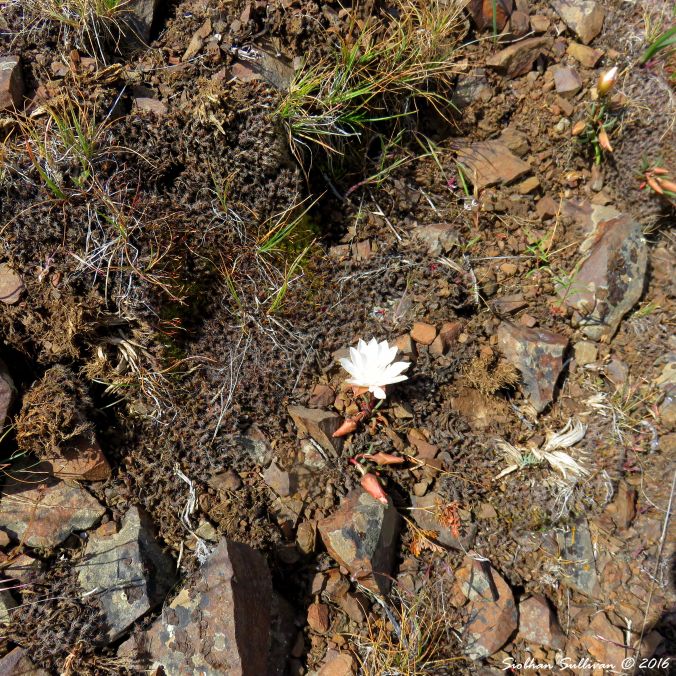
Oasis moments sometimes happen in the desert. While hiking to Chimney Rock near Prineville, Oregon, we came across a patch of bitterroot flowers. The small flowers burst forth from cracks in the sandy soil in shades of pink and white. The flowers are only about an inch and a half across. The plant is delicate yet hardy at the same time.
I had never seen so many blossoms in one place. Bitterroot has always been a plant that amazes me. It was hard for me to keep walking with our group when a part of me just wanted to crouch down to their level and marvel at their perfection.


Beneath the soil, a taproot gives this plant its name. Meriwether Lewis, of the Lewis and Clark Expedition, first saw the bitterroot plant in Lemhi County, Montana on August 22, 1805. Lewis tasted the root and described it in his journal:
this the Indians with me informed were always boiled for use. I made the exprement, found that they became perfectly soft by boiling, but had a very bitter taste, which was naucious to my pallate, and I transfered them to the Indians who had eat them heartily.

Baskets & photo of digging stick, Warm Springs Museum
Bitterroot can be found in much of western North America in drier areas with well-drained gravelly soils and several tribes made use of the plant. Shoshoni, Flathead, Nez Perce, Paiute, Kutenai, and other tribes used digging sticks to collect the roots in the spring. The roots were dried and were often mixed with berries and meat.
The roots were traded and bartered and were considered to be of great value. A bagful was worth as much as a horse. They were used as food but also had medicinal uses. Bitterroot was used for several ailments including heart problems and sore throats. They were also used to treat wounds and to increase milk flow in nursing mothers.
President Thomas Jefferson had asked Lewis to collect plant specimens on their expedition. Bitterroot plants were collected on the return trip in June of 1806. The area in Montana where the plants were collected is now known as the Bitterroot Valley. Specimens were given to the botanist Frederick Pursh in Philadelphia. Pursh named the plant Lewsii redviva in honor of Lewis.
Fun fact: The species name redviva means “reviving from a dry state.” The specimens presented to Pursh came back to life even though they had been dug up many months before.

Looking down at the details in a rock smorgasbord near Thermopolis, Wyoming. This site is a rockhounders dream! 😀

Wordless Wednesday

Look up at the water pumping windmill at Fort Rock Valley Homestead Museum in central Oregon.
Daily post – Looking up

Wordless Wednesday

Here’s a picture of bison in Yellowstone National Park. Happy 4th of July from our new national mammal in the U.S., the bison. Their scientific name is Bison bison bison. If only all scientific names were that easy!
Bison are a conservation success story. Due to over-hunting in the late 1800’s, their population was down to a few hundred animals. As a result of the conservation strategies employed by President Theodore Roosevelt and like-minded individuals, the bison were able to make a dramatic comeback.
Here’s a link to a U.S. Department of the Interior page that has 15 interesting facts about them – Bison

Earth and water photographed at Spring Creek near Camp Sherman, OR
Daily Post Photo Challenge – Opposites

Wordless Wednesday

Fox kit at Yellowstone National Park
A gust of wind
Can take them away
Embrace them and guide them
With gentle breezes

Wordless Wednesday

Cowboy Dinner Tree gift shop
Tucked away in Oregon’s Outback, you will find a unique place that hearkens back to an earlier time. The Cowboy Dinner Tree is a small restaurant located in Silver Lake Oregon, about an hour and a half southeast of Bend. The restaurant is only open from 4:00-8:30 pm four days per week and reservations are required. They give you ample portions of food here and you are advised to bring a cooler for leftovers. They do not take credit cards or debit cards so have cash on hand.


You have your choice of a 26-30 oz. top sirloin steak or a whole roasted chicken. Both are accompanied by several tasty side dishes. There is green salad, hearty soup, old fashioned sweet yeast rolls, baked potato, and a dessert. You can have coffee, iced tea, or pink lemonade with your meal. On the day we were there, they served bean soup and a small shortcake with fresh berries. Everything is homemade and made daily.


Wordless Wednesday

Last weekend I was out looking for some of the 11+ species of woodpeckers that can be seen near Sisters, Oregon. The Dean Hale Woodpecker Festival brings birdwatchers from all over the world into the woodpecker-rich habitats in the area. East Cascades Audubon Society has been putting on the well-attended event since 2011. There were 17 different field trips this year.

It was a hot day and stunning views of the Sisters peaks, Black Butte, and Mt Jefferson welcomed us.
Continue reading
Wordless Wednesday


Words
Sharp and cutting
Smooth and soothing
Colored by what surrounds them


Words
Forked and dividing
Fibrous and fortifying
Defined by what surrounds them

Words
Tangled and eroding
Tranquil and tempering
Embraced by what surrounds them

Sky. Where I live in central Oregon, it’s big and bold. The sky is rarely shrouded in shades of gray. Sunsets are painted with bold strokes of golds, pinks, and purples.

Scattered clouds on sunny days are referred to as “beauty clouds” by the local weatherman. My daughter thinks they look like the clouds in The Simpsons cartoon. Flat on the bottom with perfectly sculpted puffs on the top.


The colors of the sky are reflected in the local plants and wildlife. Mountain bluebirds surprise with their intense colors. Wildflowers like Oregon sunshine shine forth in warm golden tones. Perfect pink bitterroot flowers provide punctuation. Ancient twisting western juniper trees frame the scene.

Volcanoes bordering the High Desert are often encircled with crowns of clouds. Cool white clouds appear to temporarily cool the hot magma rumbling below.

The sky here is an ever-changing message. Clouds, rainbows, and rain and snow are the emojis on the big blue screen. Wind sweeps them to the side to create another conversation. Look up and notice what the sky is saying and listen to its meaning.

Is this Mendel’s garden? I think the Gene Jeannie has been at work in my backyard. I planted one purple and white lupine and it has multiplied. Now I have a violet and purple one, two purple and white ones, a violet and white one, and an all white one.

The road to Steens Mountain in Oregon may appear Spare , but there is an abundance of beautiful sights, sounds, and scents in the high desert.

Some put everything they have into making the world a better place.


A desert can be desolate
Arid and barren
Spring showers
Splash colors


Of brilliant hues
Amidst the sand
Painting with a delicate brush
From a palette of rainbows


Who times two is a portrait of two burrowing owls, Athene cunicularia. Observed at the High Desert Museum in Bend, Oregon.

Wordless Wednesday