
Some put everything they have into making the world a better place.
Some put everything they have into making the world a better place.


A desert can be desolate
Arid and barren
Spring showers
Splash colors


Of brilliant hues
Amidst the sand
Painting with a delicate brush
From a palette of rainbows


Who times two is a portrait of two burrowing owls, Athene cunicularia. Observed at the High Desert Museum in Bend, Oregon.

Wordless Wednesday

Looks like an old homestead, right?

Look closer.
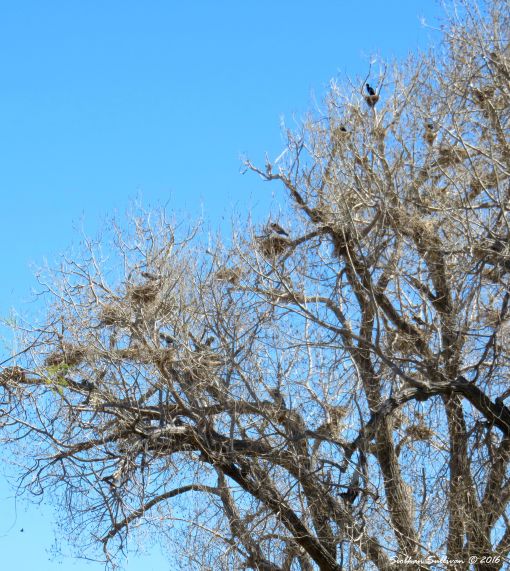
Go on…zoom in.

If we learn to focus in on things and look closer, we sometimes find the unexpected.
In this case, it’s a double-crested cormorant and great blue heron rookery. These birds look and act so differently yet they manage to get along.
This rookery is located at the Sod House Ranch at Malheur NWR. It was built by cattle-baron Peter French in the late 1800’s. The ranch was the headquarters of the French-Glenn Livestock Company that at one time covered 140,000 acres.

If I have to travel to the west side of the state, at least I get to peek at this peak.
Here is a link to a site with all kinds of interesting info about Mt Hood AKA Wy’East.


Pacific treefrog, Pseudacris regilla, serenade from our small backyard pond.
First with a couple backup singers, then the solo artist, and finally, the chorus joins in.
Hope you enjoy this short recording of the spring night songs of Pacific treefrogs.

Tucked beneath the sage
Reflections of stars above
Shine forth from the sand

Have you been pining away wishing you knew more about porcupines? Well today is your lucky day! Here’s everything you ever wanted to know about the North American porcupine, Erethizon dorsatum, but were afraid to ask.
The North American porcupine ranges throughout most of Canada and the western United States south to Mexico. They also live in the northern Great Lakes and northeastern United States regions.
North American porcupines are a large rodent with black to brownish-yellow fur and distinct quills that cover most of their bodies. They range in weight from 11 to 30 pounds and measure 24 to 36 inches in length. Porcupines are excellent climbers with short strong legs, long claws, and hairless soles on their feet. They have a small head and rounded ears.
Continue readingIn the Spring, the flocking begins.

Flocks alighting,
Optics focusing.

Nature’s fireworks on display
Exploding in a timeless rhythm.

Wings fluttering,
Voices trumpeting.

Welcoming visitors to share
In a celebration of Spring.
Flocking to Malheur.

Maybe Newberry National Volcanic Monument can light its own candles for its 25th birthday celebration. It’s young as a monument and is also young in geological terms.


The amazing, and appropriately named, Big Obsidian Flow feature was formed a mere 1,300 years ago. You can walk up a trail that winds through a massive mountain of sparkling obsidian. When I say massive I mean MASSIVE – 380 million cubic yards! From a distance, the landscapes appear to be a real life version of Mordor. Up close, the shimmering reflections all around you are dazzling.
Continue reading
Mountain cottontail, Sylvilagus nuttallii
In the sagebrush sea
Where bunchgrass waves in the wind
Alone he grazes
Nose twitching, large eyes gazing
Cottontail punctuating

Hmmm…a predominantly pink woodpecker named after a famous early American explorer and a wily relative of the crow named after his partner. That might make for an interesting bit of writing. I started to research the topic and decided to create a Lewis and Clark Critter Quiz.
Little did I know there was controversy linked to the plants and animals “discovered” on the Lewis and Clark expedition. The expedition supposedly discovered 178 plants and over 122 animals previously unknown to science. Or did they?
Other sources say they “encountered” or “reported” certain wildlife and plants. Due to discussions as to the accuracy of previously published lists, one recent list is divided into two sections: Discovered (for the first time by European Americans) and Described. Some of the flora and fauna species had been discovered in other parts of North America (or the world) prior to the time of the expedition while others had been a part of native people’s life for many years.
I am lucky to have seen many of the wildlife species that Lewis and Clark discovered and described. Many of these creatures live in and around Yellowstone National Park, which I have often visited. Here is a quiz that includes pictures of wildlife encountered on the expedition.
Did the Lewis & Clark expedition Discover them or Describe them? The answers are at the end of this quiz.
Continue reading
Silent Sunday


Winter…
Mutes colors
Softens edges
Highlights textures
Blankets the sleeping

This peace tree was seen in my backyard. Please share this image and the words I wrote to go along with it.

You can get to top of the Lava Butte cinder cone by hopping onto a shuttle or taking a short hike from its base. The 500-foot tall butte is located at the Lava Lands Visitor Center in the Newberry National Volcanic Monument about eight miles south of Bend, Oregon. Lava Butte is one of the hundreds of cinder cones in the immediate area.
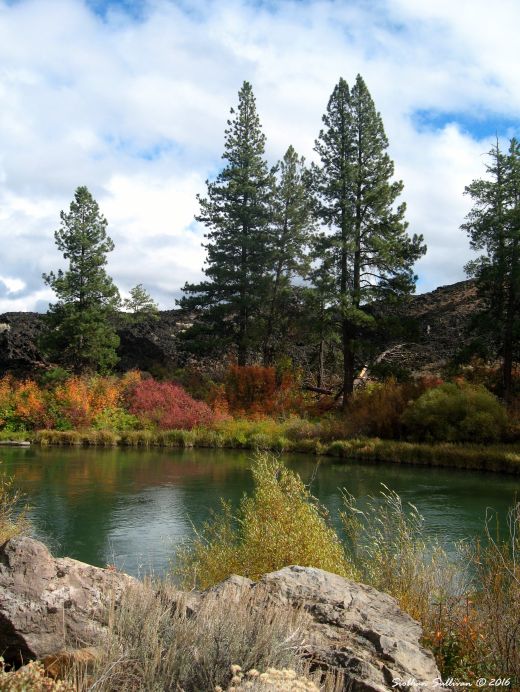
Lava Butte erupted about 7,000 years ago. There are several trails that wind through the ancient lava flows and onto the flanks of the butte. There were three main gutters where most of the lava flowed. Ten square miles of pine forest were buried by lava. The lava flows blocked the Deschutes River in five places. If you walk the trail to Benham Falls you can see where the river has made its way through the lava rock.
Continue reading
Look beneath your feet
And notice

Notice the textures
Notice the colors blending
And bold


Bold and brilliant hues
Bold and distinct edges
And patterns

Patterns of cracks
Patterns of smoothness
And transitions


Transitions moving towards new
Transitions moving in a rhythm
And beat

Beat into the earth
Beat into your memory
And soul

It’s meadowlark time! I couldn’t find a clock I really liked so I made one with some leftover scraps of wood. I painted a Western Meadowlark, Sturnella neglecta, on it because it’s our state bird. It’s also the state bird of Montana, Wyoming, North Dakota, Kansas, and Nebraska.
They are a beautiful bird with bold, bright markings. They have a cheery sounding song that always reminds me of the Wild West. Listen to it here. Western Meadowlark song.
Songsters of the Spring has photos of other yellow-colored songbirds of the High Desert.


Oregon WinterFest celebrates the winter season here in Central Oregon. This is the 17th year of the event. Here are few photos from the recent event.
Continue reading
Thinking about trying out snowshoeing? Last weekend I went out for the first time to try out snowshoeing on Mt Bachelor as part of a free guided tour. Knowledgeable volunteers take you out for a 90-minute walk in a forested area near the ski runs. The tours leave at 10:00 am and 1:30 pm. Snowshoes are provided (thanks to REI for donating them) or you can wear your own.

The volunteers will give you a quick talk on a few of the dangers associated with this sport such as tree wells. This is the area that forms in the snow close to a tree that people can fall into and sometimes not be able to get out of. I also learned that predators like to go into them in search of entrances to the burrows of small mammals. Kind of like a vending machine area for them.
Continue reading


Last week I took a quick trip to see the sunset from Smith Rock State Park. Sometimes you forget to appreciate what is in your own backyard. I will go back again when I have more time…


Did that get your attention? I went to the Oregon WinterFest event here in Bend this weekend and took some pictures of the Fire Pit Competition that I wanted to share with you. This is the 17th year of the festival so it has a long history in the area. This is the fourth year for the fire pit competition and there are more entries every year.


The dragon and a fire pit with the flag bridge and Deschutes River in the background.
Continue reading
The birds at Malheur National Wildlife Refuge were so joyful, some of them walked on water in a happy dance.
Video of Western grebes dance…


Things I’ve learned while antiquing that apply to life…
You can find wonderful and amazing things if you just remember to look up.
Imperfections may make things less valuable but they are the most treasured.
The experience is worth more than finding the thing you seek.

Hanauma Bay, Hawaii
What does the Owhyee River in southeastern Oregon and Kanaka Flat near Jacksonville, Oregon have in common? Both place names refer to the Hawaiians that lived in Oregon in the 1800’s.
In 1811, Jacob Astor hired the first Owyhees, an older spelling of Hawaii, to work in the fur trade. A post was established in Astoria, Oregon and was later turned over to the Montreal-based North West Company. The fort was eventually renamed Fort George and it was moved to another location.
How did Hawaiians get to the mainland? Captain James Cook discovered the Hawaiian islands in 1778 and named them the Sandwich Islands after the Earl of Sandwich. Ships stopped in Hawaii for provisions and since the native people were well known for their maritime expertise, they were hired as replacement workers. They were also known to excel in swimming, fishing, hunting, and in the construction of posts and forts.

Waimea Falls, Hawaii

Cool snowy blankets
Boldly contrasting branches
Frame an immense sky
Blinking awake in deep blue
Blushing in flashes of fire

His twittering voice kept leading me on through the wilderness. It seemed like every time I raised my binoculars to my eyes, he would make a quick getaway.
I followed him on winding trails bordered by bubbling and spouting geysers. He flitted through pine forests doused by thunderstorms. Gusts of wind kept pushing him just out of my reach.

Finally, finally, I came eye to eye with the mysterious beast. A Yellow-rumped warbler, Setophaga coronata auduboni. This pint-sized songbird perched in the tree and stared at me as if he was shouting, “Ollie, Ollie in come free!” Our game of hide and seek was over and he stayed in plain sight on his home base.
The tree clung to the side of a cliff overlooking Tower Fall. The little bird had lead me to an important spot in Yellowstone National Park.
Continue reading

When you go outside into parts of the 135-acre property, you will be able to visit various exhibits. The Autzen Otter area is being renovated and won’t be open again until sometime in the spring of 2016. Be sure to stop by to see the entertaining otters once the exhibit reopens.


Keep going around the trail and make a brief stop at the wildlife viewing area. Here you might get a glimpse of woodpeckers, nuthatches, chickadees, squirrels, and chipmunks. You might get lucky and spot a hawk or owl waiting to get a snack.
The Wind, Earth, and Fire Trail is nearby and it shows how fire plays an important role in forest development. Keep following the trail and stop into the Changing Forests exhibit to learn about forests in the area.


Next you will see the Miller Family Ranch. The buildings there are built to show what a farm in 1904 would have looked like. Peek inside the cabin to see how a family lived and watch interpreters demonstrate life in those times. There’s also a barn, corral, chicken coop, saw mill, and even an outhouse. The woven wood corral is practical but also a work of art. You may see horses, donkeys, and chickens at the ranch.


Tucked away in the pines south of Bend, you will find a magical place. The High Desert Museum may not be what you expect when you see the word “Museum” in its name. Yes, it does have artifacts in permanent and rotating exhibits but they are beautifully displayed in buildings that blend into the environment. There is much more to this place than traditional exhibits.


The rotating exhibits cover many facets of the high desert. In December of 2015, these included one on weather, one on sage grouse, and another on women of the American West. There are daily talks and demonstrations about nature and history related to exhibits at the Museum. The Museum also has people dressed in period clothing interpreting history and a small collection of desert wildlife.

One of the first things you see as you drive up the long driveway is the small High Desert Ranger Station. This was an actual station and it was built in 1933 and moved here in the 1980’s. It’s only open during the summer months.
Continue reading
Images by Edward S. Curtis are still being pushed out into the world. There are many inexpensive prints available. In the last presentation of the Curtis Fever series, Dr. Julia Dolan wondered what Edward S. Curtis conclusions would be over this citywide event. She wondered what the tribes thought about it as well. Though Curtis photographed native peoples because he thought they were vanishing, that idea was wrong since they still exist. An advertisement for a TV show showing a portrait of Curtis on a bed stand was shown. It was from a program called, “The New Normal”. Ironically, it has become the new normal to see pictures of Curtis and the photos he took all over the world thanks to the Internet.


Verdant and vibrant
Cool and calm

It was assumed that all of Edward S. Curtis’ photogravure copper plates were lost or destroyed. It’s common practice to destroy the plates after the initial printing so more can’t be made. However, many were sold to the Charles E. Lauriat Company in Boston. In 1972, decades after he passed away, there was a Edward S. Curtis discovery surprise. A treasure trove of Curtis’ work was discovered in the Lauriat basement by photographer Karl Kernberger. This cache included 19 complete bound sets of The North American Indian, thousands of paper prints, copper plates, unbound pages, and the original glass plate negatives. It’s important to realize how significant this discovery was. This collection subsequently passed through several hands. In 2005, Kenneth Zerbe purchased the copper plates. New prints were eventually made from the plates. However, they aren’t printed on the high quality Van Gelder paper favored by Curtis.
In recent times, Christopher Cardozo has launched a repatriation project to return some of Curtis’ works to Native American people. As a result of this work, we now know the names of 3,500 people featured in the photographs.
Three contemporary Native American photographers, and their responses to Edward S. Curtis’ work, will be the subject of an upcoming exhibit. The exhibit runs from February 6, 2016 to May 8, 2016 at the Portland Art Museum. Photographs from Zig Jackson, Wendy Red Star, and Will Wilson will be featured in the exhibit.
Each artist responded in different ways to the Curtis photographs. Zig Jackson noted that people still “take” a photograph of Native Americans. He even pokes a little fun at this concept in one of his pictures entitled Indian Photographing Tourist Photographing Indian. Several volumes of The North American Indian will also be displayed in the upcoming exhibit. Digitized versions of Curtis’ original audio recordings of native language and song will be a part of the exhibit. The Museum is also trying to crowdsource a way for descendants of people featured in The North American Indian to be able to input information about themselves and their ancestors.
Photo by Edward S. Curtis in this article from the following source: http://curtis.library.northwestern.edu/index.html
Posts in this series:
Edward S. Curtis Fever in Bend, Oregon
Edward S. Curtis Photo Techniques & Artistic Movements Pt. 2
Edward S. Curtis History – Childhood to Businessman Pt. 3
Edward S. Curtis’ Mission – A History (continued) Pt. 4
Edward S. Curtis’ life of twists & turns Pt. 5
Edward S. Curtis’ Film – In the Land of the Head-Hunters – Pt. 6
Controversy surrounding Edward Curtis & documentary – Pt. 7

There is controversy surrounding Edward Curtis’ work. Some think the photos were staged and that they degraded and dehumanized the people into mere caricatures. Some think he dressed the people portrayed in a certain way; others say they actually dressed in the clothing they wished to be photographed in. Oftentimes they are portrayed wearing traditional clothing that had been outlawed for them to wear. In Geronimo’s case, he is pictured wrapped in an Army blanket because that is all the white man gave him.
In the 2000 film, Coming to Light: Edward S. Curtis and the North American Indian, many present-day Native Americans were interviewed in regards to Curtis and his work. It has deeply affected modern day tribal members. Some treasure the images and recordings as reminders of their ancestors while others want references to that time to be over. One of the people interviewed about the images remarked that “the world came alive again when viewing them.” During that period in history Native Americans could be thrown in jail for wearing their traditional clothing, speaking their language, and practicing their rituals.
Continue reading
In 1914, Edward S. Curtis’ film, In the Land of the Head-Hunters, featuring the Kwakiutl tribe, was shown to theater audiences. He worked on the film with George Hunt, an adopted member of the tribe. Hunt had been indispensable when he had worked for anthropologist Franz Boaz. The Kwakiutl tribe is from Vancouver Island and they rely on salmon fishing for their way of life. However, Curtis had them pretend to hunt whale in the film. Creating the film had its hardships including an incident when Curtis was dropped off on an “island” that flooded with the incoming tides. It left him waist-deep in water through the night.
The film includes a potlatch ceremony because Curtis thought filming it would be very dramatic. The Kwakiutl culture carved elaborate totem poles, canoes, and longhouse buildings. Tribal members wore full-body ceremonial garb made from wood, feathers, and skins that represented animals.


As the new year approaches
You can choose to look down and back
Or up and forward

Edward S. Curtis married Clara S. Phillips in 1892 and they had four children together. His photography work took him away from home for long periods of time. Due to his long absences and the financial drain on the business, Clara divorced him in 1916 and gained full custody of their children. Edward S. Curtis’ life changed dramatically and he moved into the Rainier Club in Seattle. He paid for room and board by taking portraits of its wealthy members. At the time of the divorce, many negatives were lost because both Clara and Edward S. Curtis destroyed them rather than see the other person own them.
In the 1920s, Curtis worked briefly in the motion picture business. He worked on Tarzan movies and in 1923 worked on The Ten Commandments with director Cecil B. DeMille. After a few years in the business he went back to working on The North American Indian project, though on a much smaller scale. He took his daughter, Florence, with him into the field.
Continue reading
Curtis decided to make it his life mission to document the tribes of North America. He thought they were on the point of vanishing. At one point he went to the Smithsonian to ask for financing but they told him, “We have experts here; some have even been to Indian country”. They preferred to work with researchers with credentials from academia. The Smithsonian also told Curtis that the Native Americans had no religion and it is interesting to note that Curtis documented that everything done by the people featured in the books is done to a sacred and spiritual point.
Curtis approached financier and banker J.P Morgan about financing the project but was turned down at first. He pulled out some of his photos and Morgan was so impressed by them that he offered to finance him with an initial investment of $75,000. Morgan was particularly impressed by the photo of a girl entitled Mosa-Mohave.


Edward S. Curtis was born in Wisconsin in 1868. Two years before he was born, the Indian Wars were taking place. There were 200 battles in an eleven-year period. His father, Reverend Asahel “Johnson” Curtis, served in the military but was injured in the Civil War. He worked as a traveling pastor for a while until his health deteriorated. The Curtis family lived in abject poverty on a farm. Edward and his father moved to the Seattle area in Washington State and built a cabin near Port Orchard. Sadly, the reverend passed away on the day his wife moved there in 1887. These early life experiences in the Edward S. Curtis history affected his work.
Though Edward only completed sixth grade, his intelligence and drive helped him go on to become famous for documenting Native Americans at a time when many thought they should be eliminated. In the process, he used techniques in photography development and printing that brought his subjects to life. Of the 50,000 negatives that he made, only around 1,000 are known to still exist. He also made 10,000 sound recordings on wax cylinders documenting the language and songs of many of the tribes he encountered. About 800 of the cylinders still exist. His film on the Kwakiutl (now known as Kwakwaka’wakw) was the first to use actual tribal members.
Continue reading
Game of Thrones fans may know what dragonglass is but the rest of you may be going, “Huh?” The rock plays an important role in the story. Most people know it by the name obsidian. Like glass, obsidian fractures into pieces with sharp edges. It can be found in a wide variety of colors.

Obsidian forms when lava from a volcano cools rapidly with minimal crystal growth. Volcanic activity in Central Oregon is recent, in geological terms, so obsidian is fairly common in some areas. Lava flows covered hundreds of acres in this region. I have found obsidian in my yard between the sagebrush and bunchgrass. Isn’t this a cool piece?
Continue reading