Dissipating clouds: Remembering the pronghorn

Pronghorn near Antelope, OR 12-11-2015

Sometimes you can be trudging along with a little dark cloud hovering over your head and you almost walk by something intended for only you to see. I had one of those moments years ago at Hart Mountain National Antelope Refuge. I had been doing research there and often saw pronghorn on sagebrush covered hills in the distance.

Hart Mountain Antelope Refuge

Hart Mountain National Antelope RefugeThe refuge was created in southern Oregon in 1936 to protect pronghorn, otherwise known as antelope. This icon of the Wild West is an interesting creature. More closely related to giraffes than deer, their uniquely shaped horns have a bony core that is covered with a sheath that they shed every year. They are capable of running at speeds as fast as 55 miles per hour for short distances.

On that long ago day, I took a hike by myself to sort out my thoughts. I walked on a trail that bordered a willow-lined creek. My head was down, focused on the gravelly trail ahead of me.

Pronghorn at Hart Mountain

A close encounter

I almost didn’t notice the pronghorn next to the trail. It was so close I could have stretched out my arm and touched it. I stopped and looked at it as it stared at me. Pronghorn have enormous eyes shaded by long lashes. The pronghorn looked at me curiously with those expressive eyes. The disc of white hair on its rump started to stand up as it does when they are alarmed. I stood stock still.

I’m not sure how long we both stood there regarding each other. The pronghorn eventually made a soft snorting noise and moved on its way. I stood there for a while and the thoughts of anger I previously had disappeared.

Pronghorn at Yellowstone

Steps in the right direction

Sometimes you just need to move on from things that make you angry or sad. I had a big loss this week but I decided to try to focus on some of the good things in my life. I also took steps towards more happiness.

Here are some of them:
• Rejoiced at having 150 followers on my blog as of this week (Thanks followers!)
• Joined a new children’s book writing group that meets locally
• Joined the Society of Children’s Book Writers and Illustrators group
• Signed up for eight springtime hikes
• Took pictures of wintery scenes
• Continued “research” on coffee shops in Bend
• Wrote, wrote, and wrote some more

I hope you find ways to dissipate the dark clouds in your lives!   sunclipart

Desert Bitterroot Oasis

Bitterroot, Lewisii redviva

Bitterroot, Lewisii redviva

Oasis Moment

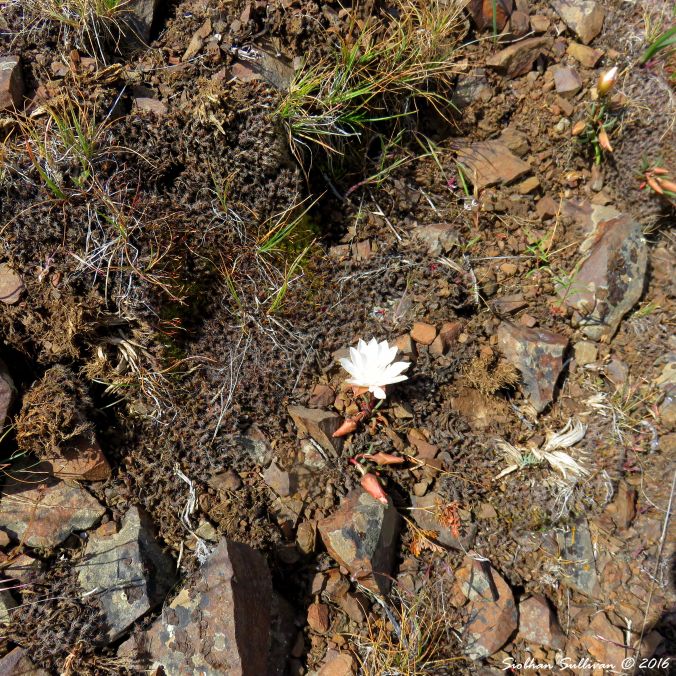
Oasis moments sometimes happen in the desert. While hiking to Chimney Rock near Prineville, Oregon, we came across a patch of bitterroot flowers. The small flowers burst forth from cracks in the sandy soil in shades of pink and white. The flowers are only about an inch and a half across. The plant is delicate yet hardy at the same time.

I had never seen so many blossoms in one place. Bitterroot has always been a plant that amazes me. It was hard for me to keep walking with our group when a part of me just wanted to crouch down to their level and marvel at their perfection.

What Meriwether Lewis wrote about bitterroot

Beneath the soil, a taproot gives this plant its name. Meriwether Lewis, of the Lewis and Clark Expedition, first saw the bitterroot plant in Lemhi County, Montana on August  22, 1805. Lewis tasted the root and described it in his journal:

this the Indians with me informed were always boiled for use. I made the exprement, found that they became perfectly soft by boiling, but had a very bitter taste, which was naucious to my pallate, and I transfered them to the Indians who had eat them heartily.

Baskets & photo of digging stick, Warm Springs Museum

Baskets & photo of digging stick, Warm Springs Museum

Usage by Native Americans

Bitterroot can be found in much of western North America in drier areas with well-drained gravelly soils and several tribes made use of the plant. Shoshoni, Flathead, Nez Perce, Paiute, Kutenai, and other tribes used digging sticks to collect the roots in the spring. The roots were dried and were often mixed with berries and meat.

The roots were traded and bartered and were considered to be of great value. A bagful was worth as much as a horse. They were used as food but also had medicinal uses. Bitterroot was used for several ailments including heart problems and sore throats. They were also used  to treat wounds and to increase milk flow in nursing mothers.

President Thomas Jefferson had asked Lewis to collect plant specimens on their expedition. Bitterroot plants were collected on the return trip in June of 1806. The area in Montana where the plants were collected is now known as the Bitterroot Valley. Specimens were given to the botanist Frederick Pursh in Philadelphia. Pursh named the plant Lewsii redviva in honor of Lewis.

BitterrootGrayButte15May2016

Fun fact: The species name redviva means “reviving from a dry state.” The specimens presented to Pursh came back to life even though they had been dug up many months before.


Desert Sky

Juniper sunrise 2Feb2015

Painted skies

Sky. Where I live in central Oregon, it’s big and bold. The sky is rarely shrouded in shades of gray. Sunsets are painted with bold strokes of golds, pinks, and purples.

Near Chimney Rock, OR

Scattered clouds on sunny days are referred to as “beauty clouds” by the local weatherman. My daughter thinks they look like the clouds in The Simpsons cartoon. Flat on the bottom with perfectly sculpted puffs on the top.

Wild creatures and plants

The colors of the sky are reflected in the local plants and wildlife. Mountain bluebirds surprise with their intense colors. Wildflowers like Oregon sunshine shine forth in warm golden tones. Perfect pink bitterroot flowers provide punctuation. Ancient twisting western juniper trees frame the scene.

The Sisters Volcanoes 2Sept2015

Volcanoes bordering the High Desert are often encircled with crowns of clouds. Cool white clouds appear to temporarily cool the hot magma rumbling below.

Sunset 2Feb2016

The sky here is an ever-changing message. Clouds, rainbows, and rain and snow are the emojis on the big blue screen. Wind sweeps them to the side to create another conversation. Look up and notice what the sky is saying and listen to its meaning.

Optimism in a single flower – Inspiration

Optimism -Carnation, Dianthus sp.
Carnation, Dianthus sp.

Some put everything they have into making the world a better place.

Easter cottontail

Mountain cottontail

Mountain cottontail, Sylvilagus nuttallii

In the sagebrush sea
Where bunchgrass waves in the wind
Alone he grazes
Nose twitching, large eyes gazing
Cottontail punctuating

Antique Thoughts

Things I’ve learned while antiquing that apply to life…

You can find wonderful and amazing things if you just remember to look up.

Imperfections may make things less valuable but they are the most treasured.

The experience is worth more than finding the thing you seek.

Winter Sunrise captured in words and visions

Winter Sunrise

Winter Sunrise

Cool snowy blankets
Boldly contrasting branches
Frame an immense sky
Blinking awake in deep blue
Blushing in flashes of fire

Twittering – A bird showing me history

Twittering Audubon's Warbler

His twittering voice kept leading me on through the wilderness. It seemed like every time I raised my binoculars to my eyes, he would make a quick getaway.

I followed him on winding trails bordered by bubbling and spouting geysers. He flitted through pine forests doused by thunderstorms. Gusts of wind kept pushing him just out of my reach.

Twittering Audubon's warbler

Finally, finally, I came eye to eye with the mysterious beast. A Yellow-rumped warbler, Setophaga coronata auduboni. This pint-sized songbird perched in the tree and stared at me as if he was shouting, “Ollie, Ollie in come free!” Our game of hide and seek was over and he stayed in plain sight on his home base.

The tree clung to the side of a cliff overlooking Tower Fall. The little bird had lead me to an important spot in Yellowstone National Park.

Continue reading

New Year: An optimistic reflective poem

New Year - Black-tailed Deer. Olympic National Park, WA
Black-tailed Deer. Olympic National Park, WA

As the new year approaches
You can choose to look down and back
Or up and forward

Chickaree


Agile climbers

Mischievous thieves

Scolder of treetops

Digger under leaves

Jays – A bird always a part of my life

Blue Jay by Siobhan Sullivan
Blue Jay

Jays have insisted on being a part of my life since I was a young child. They are brash, bold, raucous, and not easily ignored.

As a five-year old living on a wooded lot in Maryland, the Blue Jay, Cyanocitta cristata,  introduced itself to me with little formality. Its loud voice and striking appearance said, “Notice me!” Its frequent companion, the Northern Cardinal, also made it hard for me to look away. I guess that must be why I have a thing for birds with crests on top of their heads.

When I moved back across the country to Washington State, I met more Jays. On camping trips with my family, the Gray Jay, Perisoreus canadensis,  made its kleptomaniac presence known. Otherwise known as the Camp Robber, this gray bird has a way of sneaking in and taking what it wants.

Gray Jays, Yellowstone NPk
Gray Jays

I had a boyfriend in high school named Jay. One winter I was out of town for a couple of weeks and when I came back he broke up with me. He told me he had started going out with “Mary” while I was gone. He said he had gone outside in the middle of the night and shouted to the world how much he loved Mary. Like I said, Jays have a way of being loud and taking what they want.

Steller's Jay, Harrison Hot Springs, B.C.
Steller’s Jay

The next Jay played an important role in my life for many years. Steller’s Jays, Cyanocitta stelleri, are a deep azure blue topped with a black crested head. They like to imitate Red-Tailed Hawks and other birds. Steller’s Jays also have an appetite for other bird’s eggs and young. They especially like to prey on the endangered marbled murrelet, a small seabird that breeds in inland forests. While working on a project to preserve a forest where murrelets nested, I learned more about the football-shaped seabirds and their predation by jays than I knew about any pigskin football.

Western Scrub Jay, Bend, Oregon
Western Scrub Jay

The latest Jay in my life is the Western Scrub Jay, Aphelocoma californica . When we first considered moving to the high desert of Oregon, I remember looking at potential houses and thinking, “What is that bird I keep seeing?” The bird raised its white eyebrows, cocked its head, and regarded me curiously. When we found the place we eventually bought, the blue, white, and gray Western Scrub Jays were in the backyard shouting a welcome.

Jays, with their distinctive appearance and mannerisms, always seem to be a part of my life.

Clouds

Clouds…

Obscure what was once clear

Release things that burden them

Blanket the cold nights

Shine brightness on what’s to come

Surround us in the divine

A fluttering of wings: Townsend’s solitaire

Townsend's Solitaire in Bend, Oregon  October 2015

A fluttering of wings draws my attention.

A fluttering of wings - Townsend's Solitaire

Looking out of my window, I see a Townsend’s solitaire beating its wings and attacking its reflection in the side mirror of my parked car. It has been there for hours. Long strokes of white droppings adorn the side of my car. At first I assume the bird must be a male defending its territory.

Alike in appearance

Townsend’s solitaires are a drab gray relative of the American robin that most people wouldn’t even notice. They are not showy.

Male birds are usually the ones with colorful plumage but that is not the case with solitaires; the male and female look almost identical. I guess they decided not to follow the theory that a male is more brightly colored to attract females and the female has duller colors so she can sit undetected on a nest.

Continue reading

Fall’s Laughter

Close up of maple

Fall begins with joyous laughter and warm caresses that

Nod and wink as they cloak you with a touch of frost

Standing there entranced, you are enveloped by color

FallLaughs2Cool greens evolving into explosions of vibrant

Yellow, orange, and crimson

North winds swirl about you encircling you

FallLaughs4Wrapping you in the scent of remembrance

Snaps and crackles sound under your feet

Inviting you to grab handfuls and throw them into the air

FallLaughs3You smile as the coolness surrounding you is

Warmed by a shower of brilliant laughing tones

Emanating from falling leaves readying themselves for winter

Branches

Cling on to leaves all seasons

Brilliant leaves dropping in fall

Profusions of big, bold flowers

Flowers that are quiet and small

Cones that depend upon fire

Tiny, but intoxicating cones

Juicy, sweet abundant fruit

Fruit that is dry as a bone

Delicate and ephemeral

Resilient and strong

Twisting and rough

Straight and long

Furrows in the bark

Bark peeling and red

Running near the surface roots

Deep-reaching roots that are more widespread

Cedar waxwings – Smooth, elegant birds

Cedar waxwings

I moved to the high desert a couple of years ago and thought I left some of my favorite friends behind. One of my favorite birds where I lived before were the cedar waxwings. I felt lucky when I saw one.

If I could use one word to describe cedar waxwings it would be “smooth”.  Whenever I see one I have an urge to reach out and touch it. Its tawny feathers ombre into a creamy yellow on its underparts and gray near its tail. The feathers connect together so tightly that they give it a silky smooth appearance.

Bird in a cherry tree

Facts about cedar waxwings

Cedar waxwings get their name by a unique feature on the tips of their wings and tail. They look as if they got too close to a craft project that involved melting crayons. Their tail are tipped in Sunshine Yellow. Small waxy droplets of Sizzling Red tip the wings.

They seem to wear a disguise on their faces. Black masks bordered with white frame their eyes. They raise a small crest of feathers on the tops of their heads as part of their communication. It alters their appearance so that they look like someone else.

Their voices are a wispy series of notes. I always recognize it even if I don’t see the bird. It is very high pitched, making them sound smaller than they actually are. One time I saw a grosbeak feeding one and thought it might be because it mistook the call for one of its young.

cedar waxwings

At some times of the year, waxwings flock together. I see specks flying high across the sky announcing their identity with their distinctive calls.  Where I lived before, I was happy to see one or two waxwing birds at a time. Now I see flocks in my yard.

Reflections

I left behind people I had grown close to to move here, but now I flock with different crowds. Sometimes they remind me so much of someone I knew before. Are they wearing disguises or did a special piece of my past follow me to my present?

Listen to the smallest voices in Nature

Listen to the smallest voices in Yellowstone

Listen to the smallest voices for they often have the most to say.

(Close-up of heat loving thermophiles near Dragon’s Cauldron at Yellowstone National Park).

Chatter

Black and white and full of chatter. No, it’s not a newspaper; it’s a bird.

Distinctive black and white plumage and raucous calls make this bird easy to identify. Its unusually long tail gives it a unique silhouette. A magpie.

Their loud calls are often heard in the wild places they live in. They are also master imitators. Is that hawk you hear or is just a magpie?

Magpie perched in sagebrush by Siobhan SullivanFrom a distance they just look like a black and white bird. Look a little closer. Their plumage catches every little bit of light and reflects it back in an iridescent glow.

Some see them as smart opportunists while others see them as pests. Are they using their voice and brains to get ahead or get under your skin?

Not everything you see in black and white should be taken at face value. Look for colorful reflections. Listen beyond the chatter. Forgive those who use what they think will get them ahead to their advantage.