I was really looking forward to seeing the WinterFest 2025 fire pits at Bend’s winter festival event in Bend’s Old Mill District last February. They are great to photograph! I have posted pictures from previous years under the fire pit tag.
We are about to experience some of our hottest temperatures of the year in Bend this week. Maybe you are also getting some hot days where you live. I thought it might be a great time to remember the cooler temperatures of winter.
One of my favorite fire pits this year, was this VW van. It was well-designed and fun.
Another one I really liked was this one featuring a forest. Loved those trees!
Some of the fire pits have more intricate designs.
Others are more simple.
Some, like this one, are enormous. You can see lots of people meeting up around this WinterFest 2025 fire pit to take advantage of its warmth.
Some of the fire pits used a more traditional design, but included interesting cut-out details.
Others were all about the details. This octopus surrounding a boat, which I’ve shown before, had amazing details.
Some are cone or column shaped.
Other are square.
This year, snow from a recent storm covered the ground. It added to the festive mood.
Other attractions at Bend WinterFest 2025
This event includes ice carvings, hand-crafted fire pits, the Pump Bump Jam (a ski ramp with several jumps), a wine walk, food carts, beer, wine, and cider booths, bands playing on the stage, a flying dog show, and a kid’s area. It also includes booths from a wide variety of businesses and booths selling everything from jewelry and clothing to unique food items. This year, there were more Marketplace booths than I’ve ever seen before.
Colorful resting balloons, drowsy at dawn, Breathe in heated air, unfold, stretch, and inflate Burners roar, envelopes fill, tense crews hang on Baskets shift on the ground, sandbags balance weight Pilots check the weather, instruments, and tanks Passengers clamber aboard, voicing their thanks Flames dance over burners, heat enters the skirt Lift greater than weight, balloons float o’er desert
Photographs taken at Balloons Over Bend event July 2025. Here’s a short video from a previous post.
I pause beside an ancient one. She is broad and strong at the base, with outstretched branches reaching for the sky.
I continue wandering beneath the giants until I find him, the oldest one of them all.
His branches tremble and point towards a burned-out tree. The fire exposed its heart, but its thick bark protected it for many years.
I notice the toes of the tree curling. It is struggling to keep itself upright.
Then… whoosh, boom! It falls to the ground. The voices of the trees around it rise in a song of mourning.
The burned wood at its core falls away. Its wrinkled bark flakes off, exposing a more youthful surface. The hollowed out tree shares its soul with curious visitors who marvel at the wonder of its life.
You can get creative on blog posts in several ways.
Artwork
You may want to showcase your own artwork.
This rock was the perfect shape for a barn owl painting. I used acrylic paint on this rock. First, I applied a cream colored base coat, then used small brushes to add the details. I perched it in the fork of a tree in my yard for the photo.
The next photo shows a magpie flying over the Painted Hills. As I’ve mentioned in previous posts, the bird is a character in a book I’m working on. For this painting, I used watercolors and ink from a Chinese inkstick.
In the next drawing, I used pen and ink. This a stylized drawing of a grizzly bear. I had forgotten it was on the back of another drawing I had done of a bear.
Photo Bloopers
You can be creative in other ways. I like to occasionally post photo bloopers. This is where I post pictures that didn’t turn out as expected, so I add a little humor to them.
One day, I was following a family of Trumpeter Swans near the Sunriver Nature Center in Oregon. As soon as I started taking pictures, they did this.
The caption reads, “She’s about to take our picture. Quick, everyone put your head underwater!”
The next one shows the Three Gossips rock formation in Arches National Park in Utah.
One of the gossips is saying, “Then Rocky told me he’d give me the latest scoop.” Another says, “Really?” The last one says, “Cliff, you really shouldn’t spread that kind of dirt.”
The next photo shows a close up of wrinkly bark on a western juniper tree.
The caption reads, “Uh… the anti-wrinkle cream doesn’t seem to be working.”
Photo Processing Effects
Another way to get creative on your blog is to use photo processing effects. I use Corel PaintShop Pro 2021 to edit my pictures.
The first shows a cloud-filled sky over Playa at Summer Lake. If you move the slider, you can see how the original compares to the edited version. I increased the contrast and used a black and white film effect. This effect works well with cloud formations.
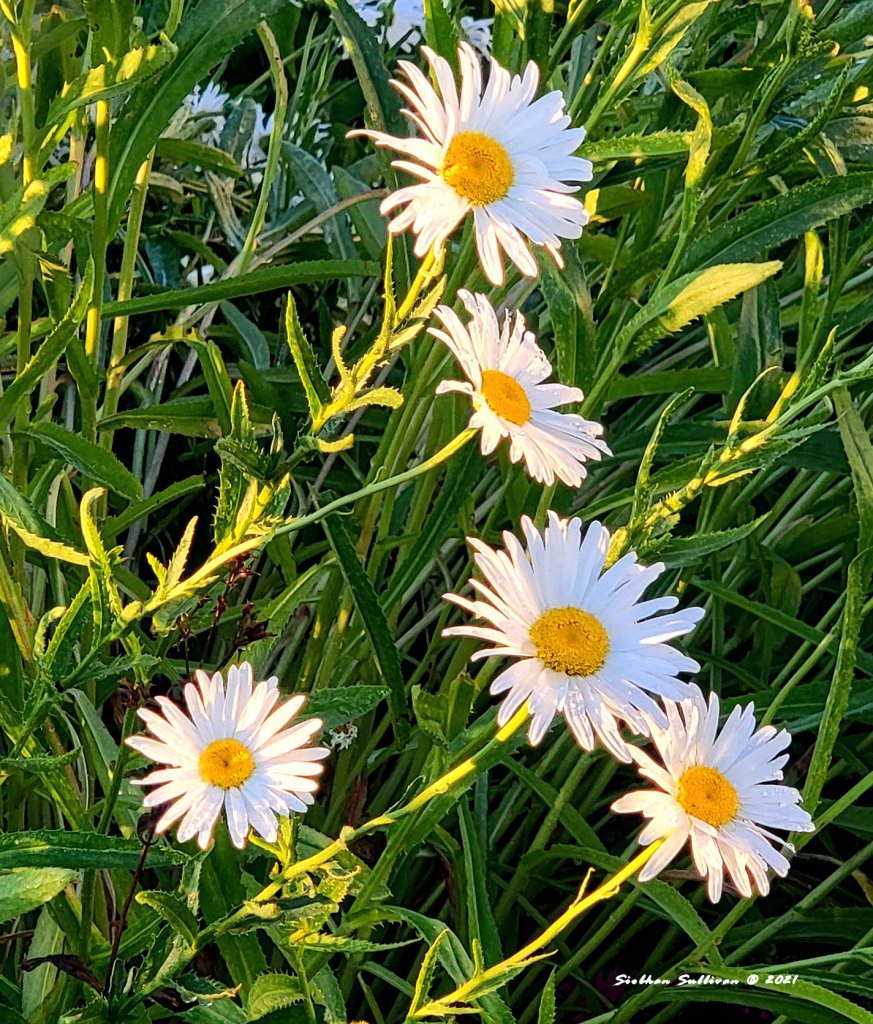
In the next photo, I used a colored edges effect on a picture I took of daisies. I like this one because it almost looks like a drawing with this effect.
The last photo shows a windmill at Fort Rock Homestead Village Museum in Oregon. For this picture I used a glowing edges artistic effect. It makes all the details stand out.
In June 2024, we visited hot springs in three western states, and Bozeman Hot Springs in Montana was our favorite. The modern rustic design is beautiful inside and out. We arrived early in the day, and it was peaceful and serene.
There are 12 pools at Bozeman Hot Springs. Water temperature ranges between 57 to 106 degrees Fahrenheit.
Outdoor pools at Bozeman Hot Springs
Outside, two curving pools flank the stage with another one in front. I like how they incorporated big angular boulders into the landscaping.
The curving outdoor pools include Big Pool, Kiddie Pool, and Middle Pool.
There is a large rectangular pool nearby.
This is Springs Pool.
Indoor pools at Bozeman Hot Springs
Inside, three smaller pools are at one end of a large pool and four are at the other. This picture shows Upper Left Hot Tub, Upper Cold Plunge, and Upper Right Hot Tub.
I zoomed in a bit to show you the seals spouting cold water. They were a nice whimsical detail.
The large indoor pool is known as Big Pool, appropriately. I liked being able to do some swimming here between time spent in the other pools.
At the other end of Big Pool, you’ll find Kiddie Pool, Adult Hot Tub, Lower Cold Pool, and Lower Right Hot Tub. Note that Adult Hot Tub has the hottest temperature of any of the pools.
This sign shows the current temperature of the outdoor pools. The temperature fluctuates throughout the day.
History
Jeremiah Mathews originally purchased the springs in 1879. He built five private bathing rooms and a 14 foot by 18 foot plunge bath. In 1890, E. Myron Ferris purchased the springs and built a two-story motel, plunge bath and private baths. The springs supposedly treat several kinds of ailments. After World War I, the parcel containing the springs was raffled off. In the early 1920s, Sam Collett purchased the springs. His renovations included a dance hall. Later, it was turned into a roller skating rink.
When we were there in June 2024, they were putting the finishing touches on the latest renovations. Robyn Duffy-Carlson and her late husband, Tom Duffy, bought the property in 2013. Since then, they have added three outdoor pools, a live music stage, and a business hub. The most recent renovations included redoing the locker rooms.
Other amenities
This facility also includes several other amenities. There is a fitness center that opened in 2010. It offers classes and personal trainers. Accommodations at Bozeman Hot Springs include RV camping sites, tent sites, and one-room and two-room cabins. For a list of upcoming events there, see this page.
A cafe provides comfortable seating next to striking artwork.
There is more seating nearby.
Things that made this hot spring stand out for me were the overall design, the number and type of pools, and the restrooms. Everything was clean and inviting. The pools include cold pools if you want to cool off after being in a hot one. The restrooms had nice showers, changing rooms, and lockers.
The restrooms had something else… hot water! A couple of the other commercial hot springs we visited did not have hot showers, even though they are built atop one of the most geologically hot places on earth.
If you’re looking for a great place for rest and relaxation, be sure to visit Bozeman Hot Springs.
On a recent sunny day, I decided to take pictures above Haystack Reservoir in Central Oregon. Here in the High Desert, reservoirs provide much of the water used in local agriculture.
The first photo shows the dam on the reservoir. There’s a fishing dock in the lower right corner. Visitors can catch largemouth bass, crappie, rainbow trout, kokanee, brown trout, and brown bullhead here.
My next picture shows a view towards the west. There’s a corner of the reservoir in the lower right. The snow-covered peak of Mount Jefferson is in the distance.
When I pointed my drone towards the east, it almost looked like a different location. The rising sun is reflected in the reservoir’s waters in a nearly monochrome image.
The next picture shows Mount Jefferson on the left and Mount Hood on the right. Volcanic peaks are ever-present characters in our landscape.
Looking again to the east, the morning light begins to brighten the scene.
Towards the south, you can spot one of the reservoir’s campgrounds. There are three campgrounds at the reservoir, including one specifically for groups.
When I zoomed in a bit above Haystack Reservoir, I saw the Sister’s peaks peeking out from between the hills.
The last picture, is looking to the southeast. Gray Butte is in the middle of the picture. It’s a great place to hike and find gorgeous wildflowers in the spring.
In past years, this and other Central Oregon reservoir levels were low due to an ongoing drought. However, we had higher than average precipitation this winter and there is currently no drought in Oregon.
On February 15, we visited the Bend WinterFest event in the Old Mill District. I was really looking forward to seeing the ice carvings. In past years, we always seemed to be there at the wrong time and missed these amazing works of art.
The artists this year included Lisa Donze + John Donze, Jacob Lucas, Russ Leno, and Wade Lapp. The ice carvings are beautiful by themselves, but if you add a little lighting, they become sort of magical.
A multi-colored butterfly ice carving
This butterfly is shown with bold bright colors and softer pastel tones. I liked how this one looked in the bold blue color the best.
Two ice cube heads ice carvings
The next carving is a whimsical one. Two people with ice cube heads carry an enormous heart. The red color was very fitting for this one.
Penguins face to face ice carvings
The next carving shows two penguins facing each other. I think I liked the purple color best on this one.
An icy rose carving
The last carving is shown in one color. This three rose sculpture looks great in this gorgeous green color.
WinterFest briefly moved away to another venue, and I was happy to see it once again at this site beside the Deschutes River. This event includes ice carvings, amazing hand-crafted fire pits, the Pump Bump Jam (a ski ramp with several jumps), a wine walk, food carts, beer, wine, and cider booths, bands playing on the stage, a flying dog show, and a kid’s area. It also includes booths from a wide variety of businesses and booths selling everything from jewelry and clothing to unique food items. This year there were more Marketplace booths than I’ve ever seen before.
I will be working on another post about the firepits that I’ll share in the future. I have featured the fire pits in the past on my blog, and it’s always been a popular topic.
If I had to feature just one photograph, as this week’s Lens-Artists Photo Challenge suggests, I would choose this one. On our way to Thermopolis, Wyoming, we paused to marvel at the Red Canyon Scenic Overlook, 24 miles south of Lander on Highway 28.
Why did I choose this photo?
It has drama in the skies. Thunderclouds collect in the background and softer cumulus clouds hover in the foreground. The blue skies contrast nicely with the clouds.
It has varying colors of soil and vegetation. Yellow wildflowers carpet the hillsides. The complementary color of the green grass borders the red rock formation. Oxidized iron between and on the rock gives the formation its stunning red color.
It shows geology in action. The ridge on the right side is an area that was uplifted 60 million years ago. The more erodible soil washed away with the action of water, leaving the scene we see today.
It contains straight and curving lines. The curving lines of the valley pull your vision to the horizon. Red Canyon Creek meanders through the middle of the picture. The straight lines of the fence help divide the scene into thirds.
It has a tiny detail with a story behind it. If you look closely, you’ll spot a white cross next to one of the fenceposts. May the people who lost their lives here rest in peace and view this remarkable scene for eternity.
The Red Canyon Scenic Overlook is a beautiful roadside attraction that’s worth stopping for. For more information on the geology of this location, check the Bureau of Land Management site.
When I’m trying to decide if I should use black and white processing on an image, I ask myself one important question: Does the structure of the elements justify its usage?
When you think of structure, you may think of architectural details. Yes, that’s one interpretation, but everything has a structure.
The first two images show a Hosta plant during a downpour of rain at Lan Su Chinese Garden in Portland, Oregon. Initially, I was disappointed to visit on a rainy day. However, while researching the garden later, I found visitors often seek out rainy days.
The color image shows off the green colors in the leaves. The monochrome image shows off the structure of the elements. The contrasting edge color, the curving veins of the leaves, and the glossiness created by the rain, shine in the black and white version.
The next two images show a Borealosuchus crocodile skeleton cast at the Museum of the Rockies in Bozeman, Montana. As soon as I entered this museum, the photographer part of my brain started imagining everything in black and white.
The color version shows the skeleton in warm tones and a recreation of what they looked like in life focuses on a vibrant creature. The black and white version highlights the structure of the elements. Whenever a skeleton is displayed well, you’ll notice its exquisite details.
Sometimes when you create a monochromatic version, you’ll find hidden surprises. The reflections from other displays across from the crocodile made this into what appeared to be a double exposure.
The next two images show barrels at Deschutes Brewery in Bend, Oregon. For certain brews, beer is aged in barrels once containing whiskey, tequila, and other liquor.
The color version shows the varying colors of the aged wood in the barrels. The black and white version also shows the age of the barrels, but emphasizes the orderliness of the storage and the structure of the stairs.
The last two images show the view from an overlook at the Paint Pots trail in Yellowstone National Park, Wyoming. This picture shows dense forests, mountains in the distance, steaming thermal features, and a sky full of puffy clouds.
The color version highlights the cool tones of the sky and forest and the warm tones of the soil around the hot springs. The black and white version lets the cloudscape be the main feature. The thermal features blend into the foreground.
Is a color or monochrome version best? Sometimes there is no right answer. As photographers, we try to capture a moment in time for viewers. With a touch of magic, we help them “see” what they may not have noticed, in color or black and white.
Exquisite Creatures Revealed is an amazing exhibition at the Oregon Museum of Science and Industry (OMSI) in Portland, Oregon. It will be on display until February 17, 2025.
Christopher Marley combined elements of art and the natural world into three-dimensional masterpieces. Marley has lived in dozens of countries and studied art and design, while pursuing a career in fashion. The time he spent working for Luis Vuitton, Georgio Armani, Gucci, Donna Karan, and Nike influenced his overall aesthetics.
These displays were created using mainly one color, complementary colors, analogous colors, and black and white. The unique works of art highlight the wide range of colors and forms occurring in nature.
Butterfly & Beetle Exquisite Creatures
The butterfly pieces were wonderfully colorful, but also beautiful because of their iridescence. The various species of Lepidoptera shown live in France, China, Indonesia, Laos, Peru, Brazil, Guyana, Bolivia, Central African Republic, Japan, Thailand, and Malaysia.
These Jewel Beetles are all the same species, just different in color. The wide variety of colors, and their shiny texture, made for an eye-catching display. They live in Southeast Asia.
Dragonflies and katydids
These remarkable creatures are considered one of the most efficient hunters in the animal kingdom. The dragonfly species in this piece live in regions of the U.S. and Asia.
There are over 20,000 species of leaf mimic katydids in the world. The insects shown live in Peru, Indonesia, Malayasia, Thailand, and Papua New Guinea.
Crab Exquisite Creatures
This triptych shows the significant differences in crab’s body shape and size. Did you know there are over 7,000 species of crab in the world?
Sea urchin and sand dollar Exquisite Creatures
I think these were some of my favorite pieces in this exhibit. The sea urchins in these pieces reside in oceans around the world.
This triptych piece had a nice movement to it. I liked its curving lines, the variety of its colorful sea urchins, and the simple shapes of the white sand dollars in the background.
I liked the next piece because it reminded me of the excitement I’ve experienced upon finding a complete sand dollar while walking along Pacific Northwest beaches. If you shake them, you’ll hear a rattling sound. The small V-shaped pieces found inside dead sand dollars are called doves. In life, they function as teeth.
Seahorses and brittle stars
These seahorse skeletons looked so delicate. These seahorses lived in Hawaii.
This piece, composed of Brittle Stars, also looked fragile. This species lives in the Philippines.
Snakes
This piece includes three Royal Pythons that lived in Sub-Saharan Africa. This piece was interesting, but I also found it to be kind of disturbing.
Feathers and birds
This piece showed the diversity of colors and forms of feathers.
These Rosella skins show the wide range of color in their feathers. This species is native to Australia.
Orchids
Christopher Marley briefly described why he included this orchid piece in the exhibition. He was impressed by the flowers’ “bizarre, extravagant, even superfluous morphology, and the colors unbound by any parameters give them a ruggedly individual, almost defiant air that I find both intoxicating and humbling.”
In case you were wondering, all of the artwork includes real preserved specimens. The specimens were collected using ecologically friendly and sustainable methods in collaboration with zoos, museums, and collectors. None of the vertebrates featured in this exhibition were killed for the art pieces.
The Exquisite Creatures Revealed exhibition was unlike any I’ve ever seen. It was definitely one of my favorite exhibits I saw last year. Yeah, the specimens themselves are fascinating, but the way Marley displayed them was awe-inspiring. WOW!
This week I’m sharing photos of the Oregon Cascades from above. Most of these pictures were taken with my DJI drone.
The Lens-Artists Photo Challenge prompt this week is “Shot from above.” That sounded like a perfect excuse to take a Sunday drive. We drove north from Bend and turned west near Terrebonne. After driving through Cove Palisades State Park, we headed south towards Sisters, Oregon.
Near Black Butte, Oregon
When you’re in dense forests, it’s hard to know what features are in the landscape nearby. I flew up a few hundred feet and got this picture of several of our mountains. The Cascade Range stretches from northern California to central British Columbia. Oregon’s Cascades are 260 miles long and as wide as 90 miles.
I like how trees look from above so I took this picture near Black Butte. I don’t usually include pictures of myself on this blog, but I do appear in this photo. Can you see me? 🙂
After navigating several roads like this, we decided to head to a lower elevation location.
Between Bend and Sisters, Oregon
We stopped at the Cascade Flyers field, located halfway between Bend and Sisters. This is where a local remote control aircraft club meets. Even an ordinary scene like this one can look interesting from the sky. I’m in this photo, too. Great self-portrait, right?
This picture shows several iconic peaks of the Oregon Cascades from above. South Sister, Middle Sister, and North Sister fill the frame. South Sister is the most active local volcano. This mountain range is almost entirely volcanic in origin.
This picture shows Black Crater and Mount Washington. From certain angles, Mount Washington has a distinctive teepee-shaped formation on its peak. This volcanic plug formed when hot magma hardened within a vent.
Here’s a closer view of Mount Washington.
The last picture shows Three Fingered Jack, Black Butte, and Mount Jefferson. Bend’s Deschutes Brewery makes a delicious Black Butte porter beer named after this peak.
I’m still learning how to adjust the camera settings on my drone. If you don’t make adjustments, the pictures tend to be overexposed in the Auto setting. That means I will have to actually read instructions or watch videos instead of just “winging” it.
While camping at Three Island Crossing State Park in Glenns Ferry, Idaho, I visited the Oregon Trail History & Education Center. Many pioneers traveling on the Oregon Trail crossed the Snake River on their way west at this site. Settlers learned to overcome the emotional and physical obstacles they encountered along the Trail with resilience and perseverance.
Near the center’s entrance, you’ll pass a couple wagons beneath a shelter. A reader board refers to them as “Motor Homes Without Motors.” They had to be lightweight, yet sturdy enough to survive the 2,000-mile journey across the country. The wagons carried many tools and treasures, but more importantly, the hopes and dreams of settlers looking for a better way of life.
This visitor center’s interactive and informative displays impressed me. I liked how it highlighted this area from different perspectives in the past and present.
Crossing the Snake River
Crossing here was dangerous, but it was shorter than the South Alternate route. The southern route passed through dry, rocky environments that were difficult to endure. There was also less potable water and feed for livestock along that route.
Though fur trappers and early explorers traveled this route beginning in 1811, most pioneers took this route from 1841 to 1848.
Pioneers used this route until 1869, when Gus Glenn constructed a ferry crossing two miles upstream. This display describes Ferryman Gustavus (Gus) P. Glenn. He was a colorful local, known as a rugged individualist.
Glenn married a Native American woman named Jenny and turned down the possibility of marrying a Euro-American when more settlers moved into the area. He noted, “She was good enough for me then and she’s good enough for me now.”
The original Oregon trail began in Independence, Missouri, and ended in Oregon City, Oregon. This map shows the various routes settlers traveled west after the Louisiana Purchase in 1803.
Native Americans in Oregon Trail History
Several of the displays featured artifacts related to the lives of Native Americans. One of the first displays shows the hunting and gathering way of life experienced by Indians of the Snake River Plain.
Indigenous people have lived in this area for thousands of years. The local environment is challenging, but they learned how to be resilient.
The figure shown below is of a woman with a digging stick.
Native peoples often dug up and collected camas bulbs.
Bulbs, seeds, and other food items were ground with stone mortars and pestles.
People wove baskets for different purposes. The photograph in this display case shows a tightly woven basket used for carrying water.
People used loosely woven baskets to gather things like roots and berries.
This display shows a spear and net used for catching salmon.
Once horses became available to Native people, hunting and trading practices changed dramatically. Horse ownership became a status symbol, with wealthier people collecting large herds of horses.
I liked this quote from the local Northern Paiute tribe.
This display shows a cutaway view of a teepee and describes the many hardships Native Americans endured on reservations.
Settlers moving into the West
Other displays in this center focus on settlers moving west as part of their “Manifest Destiny.” This 19th century belief stated that American settlers were destined by God to claim lands across North America. Its purpose was “to expand its dominion and spread democracy and capitalism across the entire North American continent.”
Unfortunately, that often meant forcing Native Americans off their ancestral lands. Thousands died from starvation and disease after being forcibly marched to distant reservations.
The U.S. population rose dramatically from 5 million people in 1800, to over 23 million by 1850.
Newspapers described an easy route with “no obstruction in the whole route.” Journals of those who traveled the route described a far different situation where “hills ware dreadful steep” and “the desert is very hard on the poor animals.”
I found this packing list interesting. If travelers lost the ox pulling their wagons, they abandoned many items shown on this list beside the road.
Since the oxen used along the route were so valuable, travelers would do anything they could to save them. This scene shows three people trying to pull a downed ox to its feet.
This is a typical covered wagon, shown with the back down as food is prepared.
These two cases show some toys and tools of children traveling the trail. They were expected to help with chores, but also had time to play games, go fishing or target shooting, and to collect wildflowers.
At first, relationships between Natives and settlers were friendly. They traded valuable items. Native peoples helped them along the route. “The Indians helped us a great deal, raking over the carts, swimming the animals, &c …” As more settlers flocked to the area, the relations changed. Native American, Hispanic, and non-European residents suffered greatly during this period of expansion.
Voices of the present at Oregon Trail History & Education Center
These photos are of contemporary residents of Glenns Ferry, Idaho.
Daryl Kirk commented on past competitions between cultures and said we need “to get together and do things together and to forget about the bad part of the past.”
Donna Carnahan remembered how her grandfather, who settled there in 1890, spoke of often playing with the resident Indian children.
Terry Gibson noted how his people comforted the emigrants. The people and their animals were in bad shape after all they had suffered along the trail. He said, “Our people were here to help them, and our children need to learn that. I think with the Crossing here, there’s an opportunity to provide healing for both cultures.”
The Oregon Trail History & Education Center is small, but worth a visit. It has a nice gift store near the entrance.
To learn more about the Oregon Trail, consider visiting the National Historic Oregon Trail Interpretive Center in Baker City, Oregon. After being closed for four years, the Center recently reopened following significant renovations and updates. I posted about this attraction prior to the renovations.
Today I’m sharing some of my 2024 favorite photos. I divided them into four categories: Critters, Cuisine, Cultural attractions, and Countryside.
2024 Favorite Photos of Critters
I’m beginning with the critters category. In case you didn’t know, I love animals and often feature pictures of them.
The first photo shows a curious Long-tailed Weasel emerging from roadside vegetation at Summer Lake in Oregon. It was so cute!
This Pronghorn pranced across a grassy field at Yellowstone National Park. These graceful creatures are one of my absolute favorites.
A Great Blue Heron in a Portland garden walked right up to me in the middle of a rainstorm. What a magical moment!
In this picture, an American Avocet crosses a pond at Summer Lake Wildlife Area. I liked the simplicity of this photo
Cuisine photos
The next category is cuisine. Did you know blog posts featuring food are some of the most popular?
I begin with an appetizer, of course. This Spicy King Salmon Hwe is from Yoli, a Korean restaurant in Bend, Oregon. We ate a tasty 5-course meal there.
The next photo is of a pizza from Rush’s Squares in Bend. Their Pesto Margherita pizza is delicious!
The next picture is of a fish taco from 10 Barrel Brewing in Bend. There are a lot of places that serve fish tacos, but this particular one’s ingredients make it stand out from the rest.
The last one is of a Mixed Berry Cobbler from the Blue Duck Restaurant at East Lake Resort in Oregon. This generously portioned dessert is great to share with tablemates.
2024 Favorite Photos of Cultural Attractions
The next category is Cultural Attractions. I did a lot of traveling in the West in 2024.
The first picture is one of several I took at Lan Su Chinese Garden in Portland, Oregon. This type of garden is designed to look beautiful from any angle.
The next picture is of old machinery at The Museum of the American West in Lander, Wyoming. I used black and white processing to highlight the lines and shapes of the machinery and the clouds.
This photo is of a Tyrannosaurus rex skeleton. It is one of many photos I took at the Museum of the Rockies in Bozeman, Montana.
The next photo is of a rock-covered bridge and building beside a pond. This picture was taken at Petersen Rock Garden and Museum, a unique roadside attraction in Redmond, Oregon.
Countryside Photos
The last category is Countryside. I include photos of landscapes from the sea to the mountains.
The first picture was taken at Fogarty Creek State Recreation Area in Oregon. The curving shapes formed by the tide were beautiful.
This photo of river reflections was taken along the Columbia River in Oregon. I used cross processing to oversaturate the colors.
I used my new drone to take pictures at Summer Lake in Oregon. This photo shows an art piece created with rocks in the foreground and dust devils spinning over the playa in the background. I wrote a short story about my visit there, featuring other drone photos.
The last photo shows the mountains surrounding the Lamar Valley in Yellowstone National Park in Wyoming. Bison herds frequently graze peacefully in these grasslands.
Hope you enjoyed seeing some of my 2024 favorite photos. Be sure to check out my recent 2024 Bloopers post to see photos from the last year interpreted with my unique sense of humor. 🙂
When you see a Turkey Vulture up close and far away, you’ll have much different opinions of them.
Up close, you may not think of them as exactly beautiful. However, their bald face is more likely to stay clean after eating dead animals. Their scientific name, Cathartesaura, means ‘golden purifier’ or ‘purifying breeze.’
You will also see their dark brown feather’s iridescent color if you observe them up close.
From a little farther away, their distinctive profile stands out. The lack of feathers on their head makes it look smaller. When they’re flying, this is even more obvious.
You often see more than one Turkey Vulture at a time since they’re attracted to prey by smell. Compared to other birds, the part of their brain responsible for detecting smells, is much larger.
This bird that’s considered to be ugly up close, is incredibly graceful in flight. They glide on their six-foot wingspan in a distinctive teeter totter flight pattern. I often have the pleasure of seeing Turkey Vultures drifting by in the skies right outside my window.
Petersen Rock Garden & Museum is a unique roadside attraction located halfway between Bend and Redmond in Oregon. The original owner, Rasmus Petersen, began working on this site in 1935.
As you can tell, he loved rocks. He constructed the many features on this 4-acre site using rocks collected within an 85 mile radius. Oregon is known as a rockhounding paradise so there are plenty of rocks nearby to collect.
About Petersen Rock Garden
The “novelty architecture” here includes castles, churches, buildings, and bridges.
If you’d like to see an impressive collection of treasures of the Wild West, be sure to visit the Buffalo Bill Center of the West. This world-class attraction is in Cody, Wyoming, an hour’s drive east of Yellowstone National Park.
Treasures of the Wild West in five museums
The Center contains five museums, including the Buffalo Bill Museum. There’s something for everyone at this museum.
Buffalo Bill Museum
During his lifetime, William F. Cody worked as a ranch hand, bison hunter, fur trapper, wagon train driver, Army scout, prospector, and Pony Express rider.
Cody is perhaps most well-known as a showman. He helped create a traveling show called Buffalo Bill’s Wild West. He took on the persona of Buffalo Bill.
Source: National Portrait Gallery. Smithsonian Institution.
Cody and his crew of performers put on outdoor western shows, highlighting (and romanticizing) the legacy of the West. The show began in 1883 and continued for 30 years.
Today I’m sharing some of my green glass from the past. It’s nice to collect things you can actually use.
The first piece is a beater/measuring cup that’s practical and pretty. The Art Deco-style measuring cup also makes a nice display piece without the beater on top.
The next piece is a large cake plate with geometric patterns. It works great for cakes (and even better for homemade fudge). 😀
The next piece is a Vess Dry Ginger Ale bottle. I really liked its curvaceous shape.